A drain backing up at night, foul water rising in a gully, or a toilet that will not flush properly is not a job to leave until morning. Emergency drain jetting is often the quickest and most effective way to restore flow when a blockage has gone beyond a simple clearance and needs proper pressure cleaning through the line.
For homeowners, landlords and local businesses, the main concern is simple – stop the overflow, find the cause and get the drain working again without delay. That is exactly where specialist drainage equipment and local experience matter. A proper drainage contractor is not turning up to guess. They are turning up to clear the line safely, check the run and make sure the problem is not left half-done.
What emergency drain jetting actually does
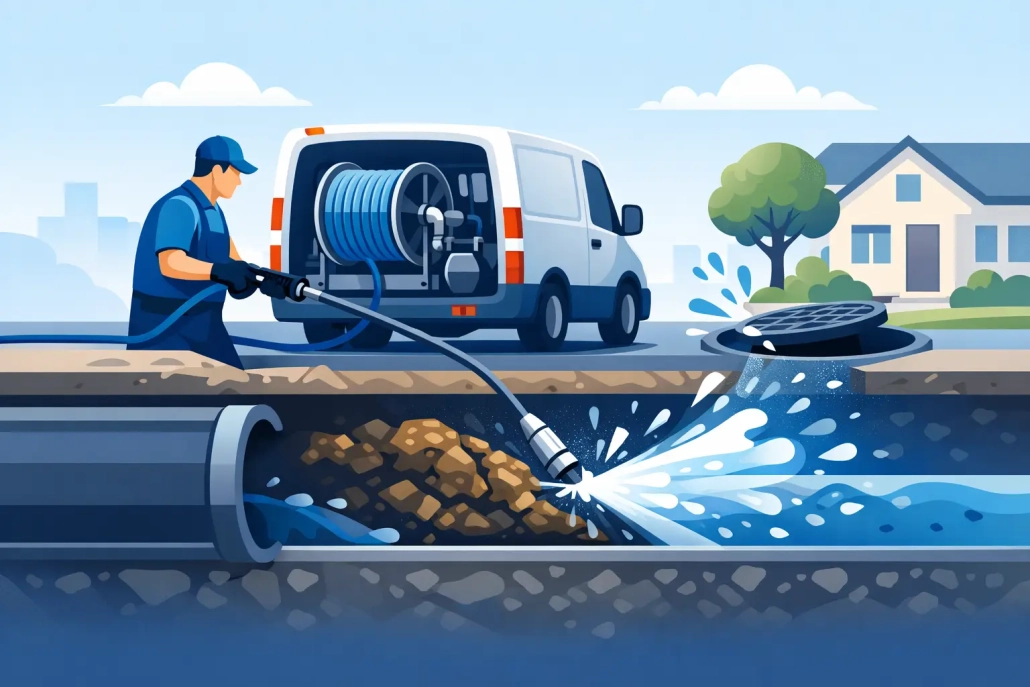
Emergency drain jetting uses high-pressure water to break up and flush out stubborn blockages inside drains and sewers. It is particularly effective when the line is blocked by grease, silt, wipes, scale, organic waste or compacted debris that ordinary rodding will not fully shift.
The benefit is not just that the blockage breaks apart. Jetting also cleans the internal surface of the pipe far more thoroughly than basic manual methods. That matters because many emergency callouts are not caused by one single solid object. They are caused by a build-up that has narrowed the line over time until wastewater can no longer pass through properly.
In the right situation, jetting gives a faster and cleaner result. It can restore flow quickly and reduce the chance of the same section blocking again a few days later. That said, it is not a cure for every drainage fault. If the pipe has collapsed, displaced, or suffered root ingress, the blockage may be a symptom rather than the full problem.
When emergency drain jetting is the right call
Not every blocked drain needs high-pressure jetting, but some situations clearly do. If wastewater is backing up into sinks, toilets, gullies or external chambers, speed matters. The longer it is left, the more chance there is of property damage, contamination and disruption.
Jetting is commonly the right approach when there is a recurring blockage in the same line, when several outlets are affected at once, or when the drainage system is slow before it fails completely. It is also a strong option for outside drains carrying heavy grease, food waste, leaf build-up or silt, especially around commercial premises and tenanted properties where the system sees regular use.
In South West London and the surrounding commuter belt, older drainage runs can present their own issues. Some properties have ageing clay pipework, awkward access points, shared drainage arrangements or long lateral runs that need more than a quick poke with rods. In those cases, emergency jetting is often the practical answer because it can reach further into the system and clear more thoroughly.
Why jetting is often better than a quick unblock
A quick unblock sounds appealing when you are dealing with an overflow or foul smell. Sometimes rods will restore flow well enough to get things moving again. The problem is that partial clearance often leaves residue behind, and that residue becomes the base for the next blockage.
High-pressure jetting is different because it deals with the build-up along the pipe wall, not just the immediate obstruction. That is especially useful with fat, scale, soap deposits and soft waste that smears and reforms after a basic clearance.
There is a balance to be struck. A good drainage specialist will not automatically use the most aggressive option if the system does not need it. Pipe condition, material, age and access all matter. The aim is to clear the blockage properly without causing damage. That is why experienced assessment on site is so important.
What to expect on an emergency visit
When a drainage specialist attends an emergency, the first job is to identify where the blockage is and how severe it is. That may involve checking inspection chambers, testing flow between points and assessing whether the issue is isolated to one section or affecting the wider run.
If emergency drain jetting is the right method, the line is cleared using the appropriate water pressure and nozzle for the type of obstruction. Different nozzles are used for different jobs. Some are designed to cut through grease and soft debris, while others are better for flushing silt and loose material along the line.
Once flow is restored, the next step depends on what is found. If the blockage appears to be caused by a one-off build-up, the visit may end there. If there are signs of a structural problem, poor fall, recurring root entry or damaged pipework, a CCTV drain survey may be the sensible next move. A proper contractor should tell you plainly which situation you are dealing with.
Emergency drain jetting and CCTV surveys
Jetting and CCTV often work well together, especially when a blockage has been cleared but the underlying reason is still unclear. You cannot always diagnose a drain properly when the line is full of backed-up water and waste. Once the pipe has been jetted and flow returns, a camera inspection can show whether there is a crack, displaced joint, root ingress or another fault further down the run.
This matters for landlords and property managers in particular. If a blockage keeps returning between tenancies or repeatedly affects the same flat, shop or rear drainage line, there is little value in paying for repeated callouts without getting to the root of it. In those cases, jetting restores service, while CCTV helps plan the proper fix.
Local drainage knowledge makes a difference
Drainage emergencies are not just about equipment. They are also about knowing the sort of systems found across Kingston, Richmond, Twickenham, Teddington, Staines, Barnes, Sheen and the surrounding areas. Older properties, extensions, converted buildings and shared runs can all complicate what looks like a basic blockage.
A local drainage specialist is more likely to recognise the typical issues seen in the area and respond accordingly. That can save time when tracing the affected line, identifying whether the problem sits within a private drain or shared sewer, and deciding whether jetting alone is likely to solve it.
MG Willmott Drainage works specifically on these kinds of drainage problems, which is why the service is built around urgent attendance, specialist equipment and practical diagnosis rather than general plumbing guesswork.
Cases where jetting may not be enough
It is worth being clear about the limits. Emergency jetting is highly effective for clearance, but it will not repair broken pipework. If the drain has collapsed, if the line has a severe belly holding waste, or if roots have entered through damaged joints, the water pressure may only provide temporary relief.
That does not mean the jetting has failed. It means the blockage was a symptom of a larger drainage defect. In those cases, the sensible route may be no-dig relining, localised repair, excavation, or further investigation depending on the condition of the system.
A reliable contractor should say so directly. There is no point promising a full solution if the evidence on site says a repair is needed. Honest advice is part of a proper emergency service.
Why speed matters with blocked drains and sewers
The biggest risk with a serious blockage is not inconvenience alone. Backed-up drainage can damage flooring, contaminate outdoor areas, create strong odours and affect neighbouring parts of the system. For commercial premises, it can interrupt trading. For landlords, it can turn into a tenancy complaint very quickly.
That is why emergency response matters so much. If the line is cleared quickly, you limit disruption and reduce the chance of waste escaping where it should not. Fast attendance also means faults can be identified before they worsen. A drain that is merely slow today can become a full overflow tomorrow.
Choosing the right contractor for emergency drain jetting
When you need urgent drainage work, what matters is specialist focus, not a broad list of unrelated services. You want someone who deals with blocked drains, sewers, surveys and repairs every day, turns up equipped for the job and can explain clearly what has been found.
Look for proven drainage experience, genuine local coverage, emergency availability and a contractor who can handle the next step if the problem turns out to be more than a blockage. Clearance, investigation and repair often sit closely together. The smoother that process is, the faster the issue gets resolved.
If you are facing an urgent blockage, the best next step is simple – get the drain assessed promptly, get the line cleared properly and deal with the cause before it becomes a repeat problem.


Leave a Reply
Want to join the discussion?Feel free to contribute!